RF-HOI: Recognize Human-Object Interaction
with Radio Frequency Signals
Johns Hopkins University
†Corresponding author
Proceedings of the ACM on Interactive, Mobile, Wearable and Ubiquitous Technologies (IMWUT), Vol. 10, No. 3, Article 159, September 2026

Abstract
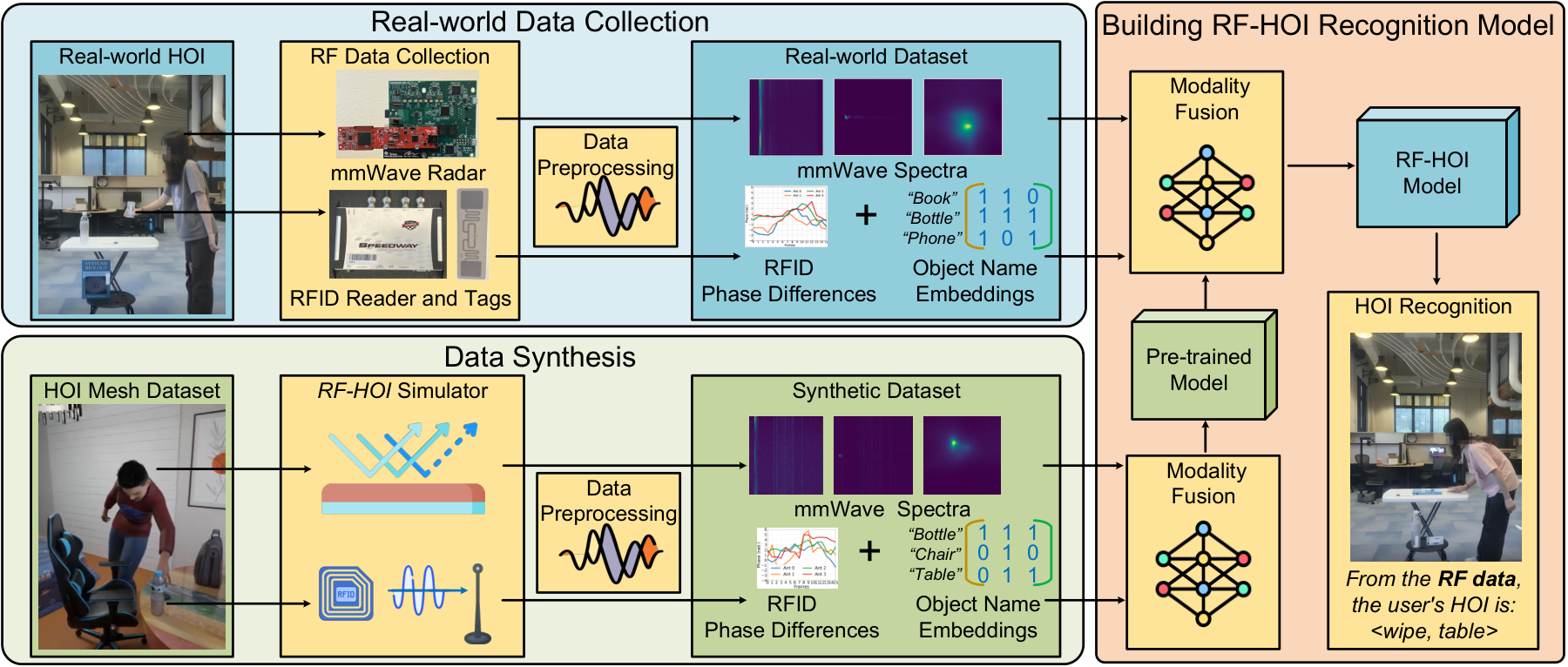
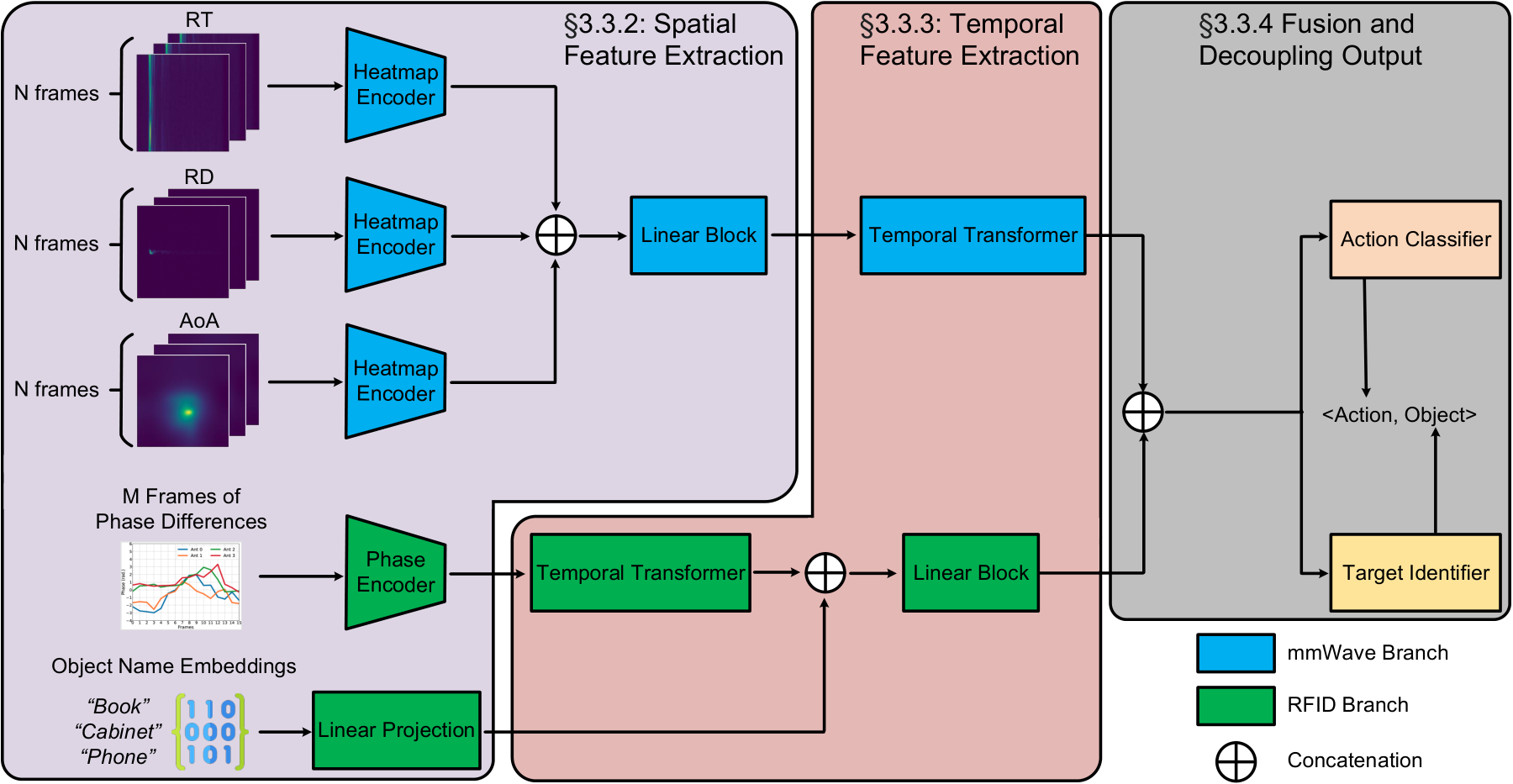
Recognizing Human-Object Interactions (HOI) is essential for intelligent systems, underpinning applications in virtual and augmented reality, embodied AI, and assistive robotics. However, vision-based HOI methods face challenges in privacy concerns and poor light conditions. In this work, we introduce RF-HOI, the first framework that only uses radio frequency (RF) signals for HOI recognition. A key challenge of RF-HOI is that single-modality RF sensing is insufficient to recognize both actions and the objects being interacted with. RF-HOI addresses this through a novel modality fusion that combines mmWave radar and RFID, enabling simultaneous action recognition and target identification. Another challenge is limited training data across diverse setups, which impairs the generalizability of the recognition model. To overcome this, we develop a simulator that synthesizes multimodal RF data for diverse HOIs at scale, allowing us to fine-tune with only a small amount of real-world data. Experiment results show that RF-HOI outperforms all baselines, approaching vision model performance, and that our diverse synthetic training data can significantly boost our system's performance on real-world scenarios. These results highlight the potential of multimodal RF sensing for robust and privacy-preserving HOI recognition as well as the effectiveness of our RF data synthesis.
Framework Overview
Data Collection Platform
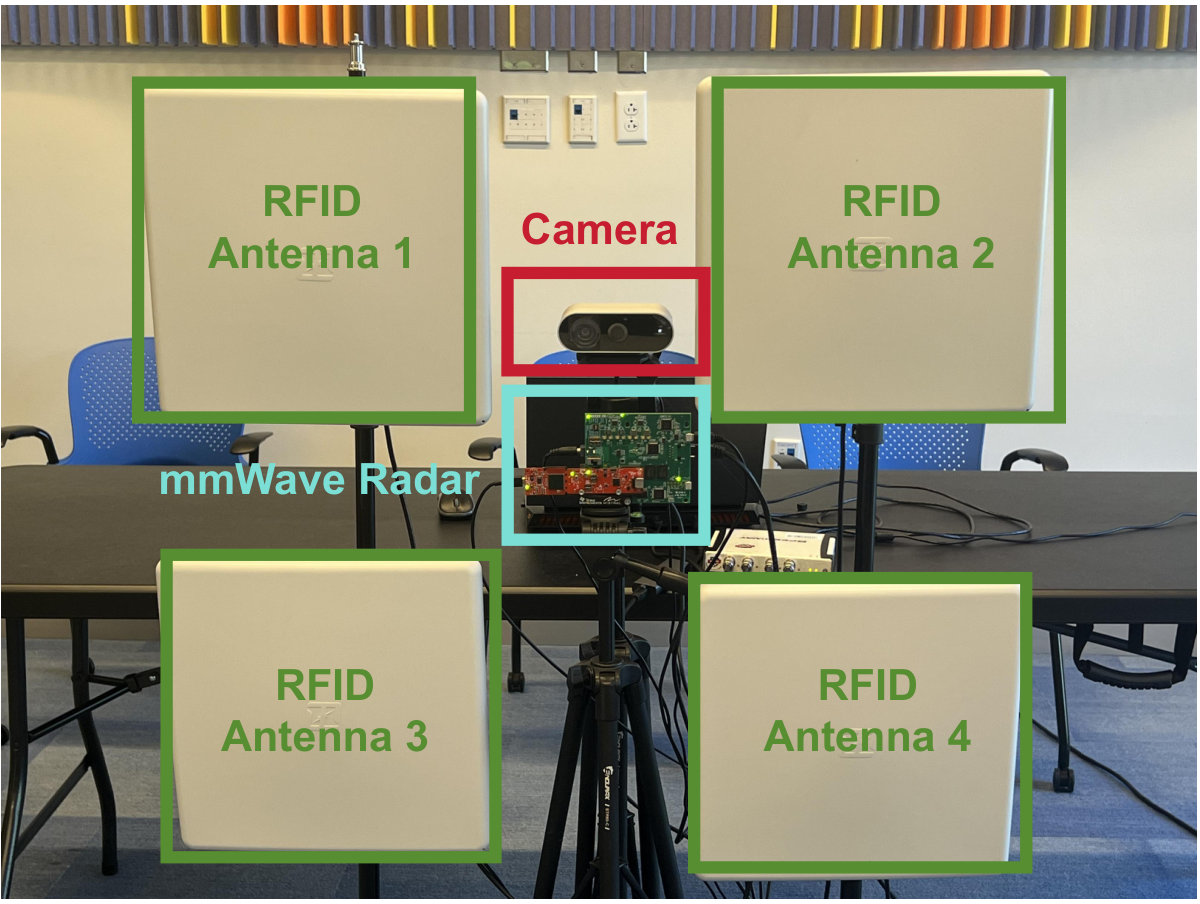
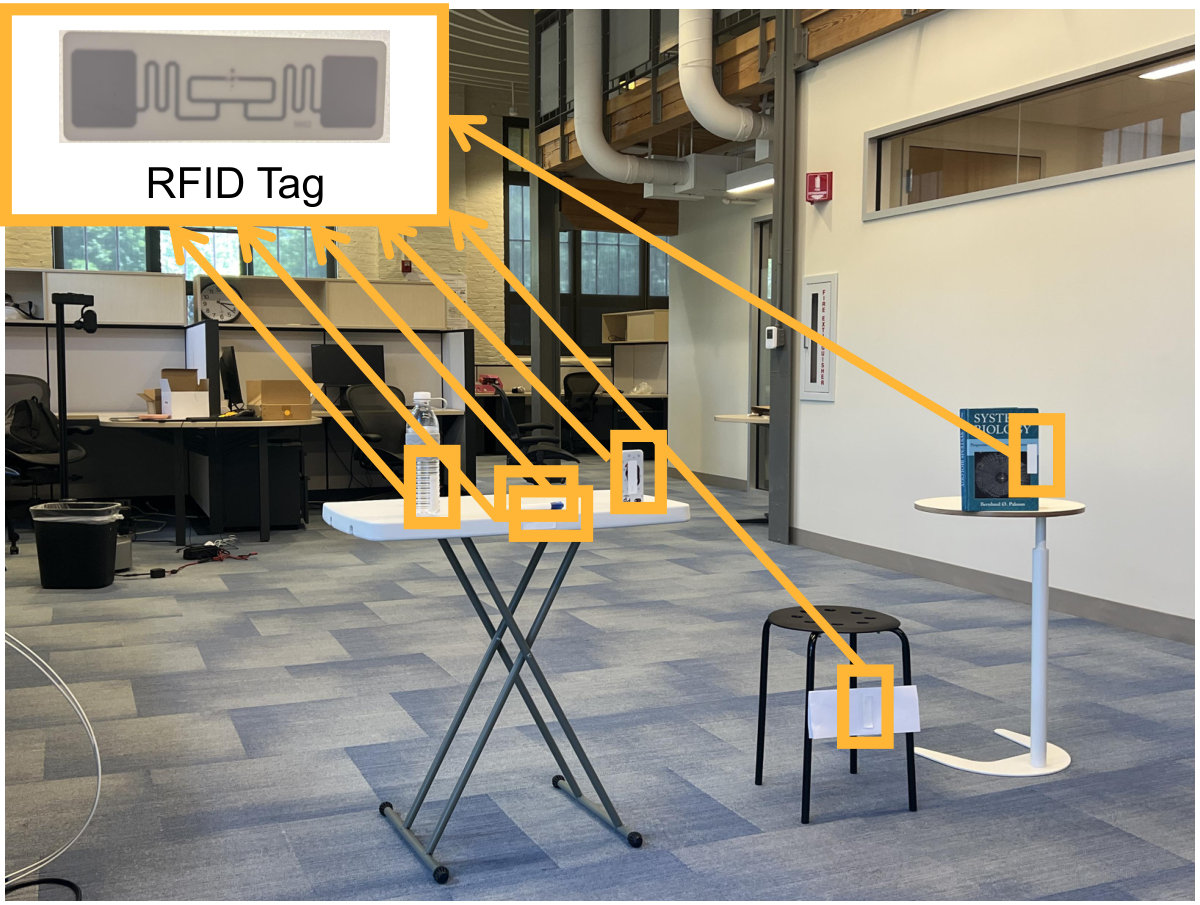
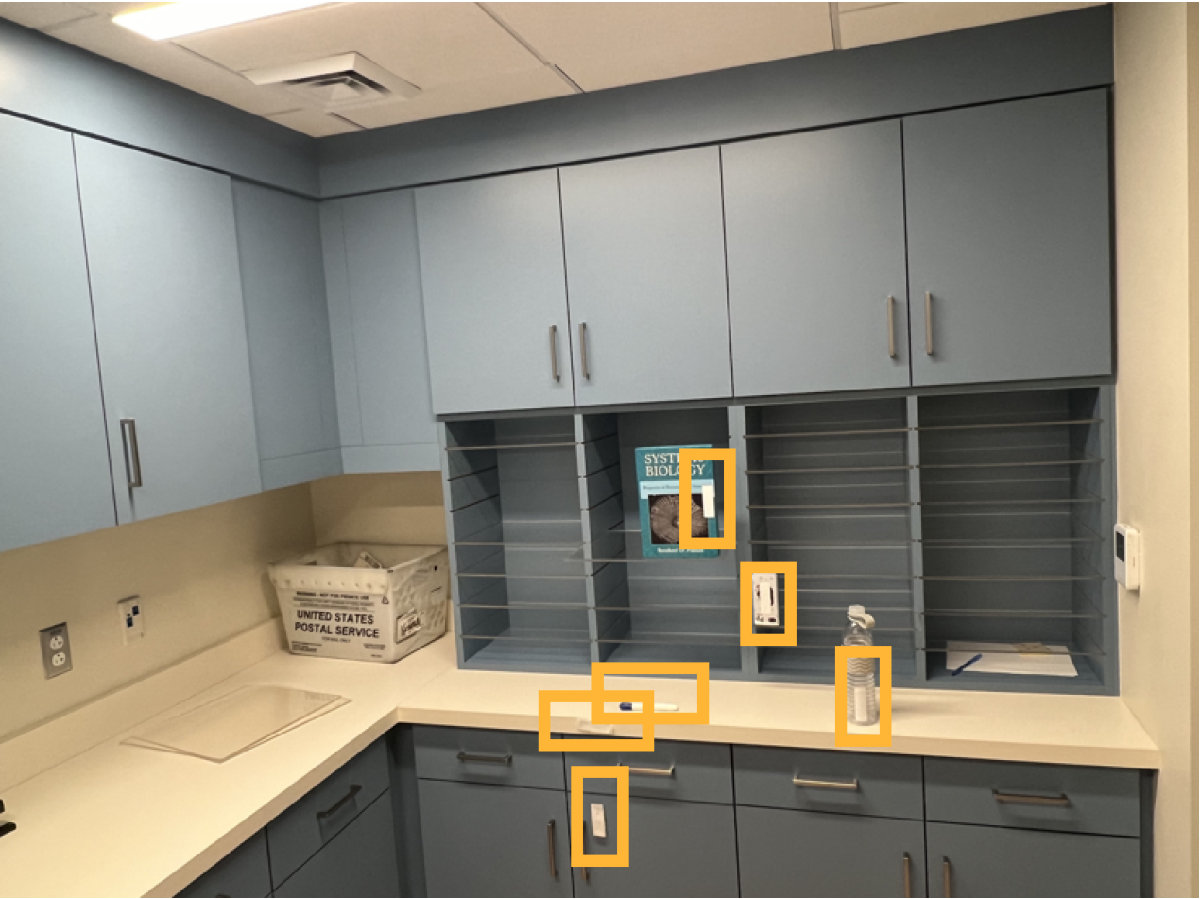
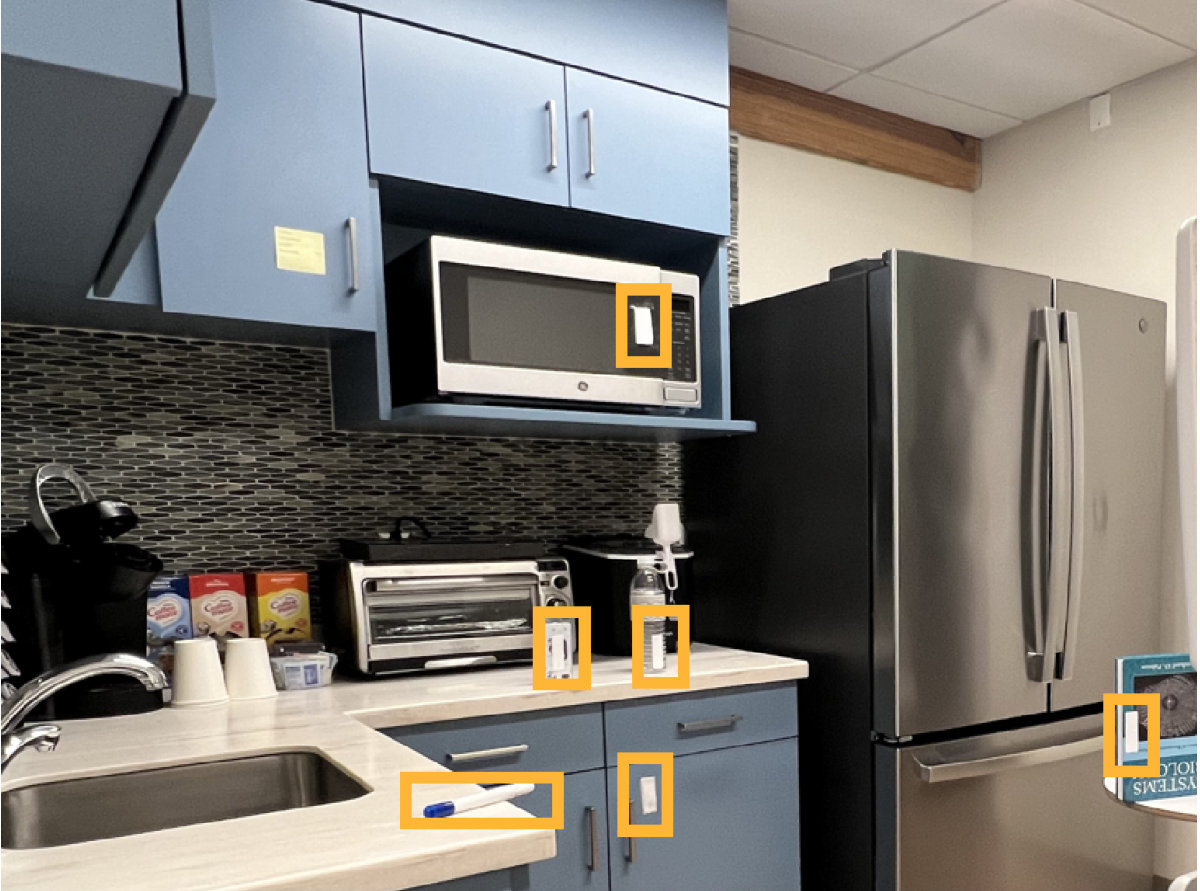
The RF-HOI platform is built from commercial components: a TI AWR1843AOP mmWave radar, an Impinj R420 RFID reader with four antennas, passive UHF RFID tags, and a Femto Bolt RGB camera (used for the vision baseline and annotation). Data is collected in three environments with increasing multipath richness.
Key Results
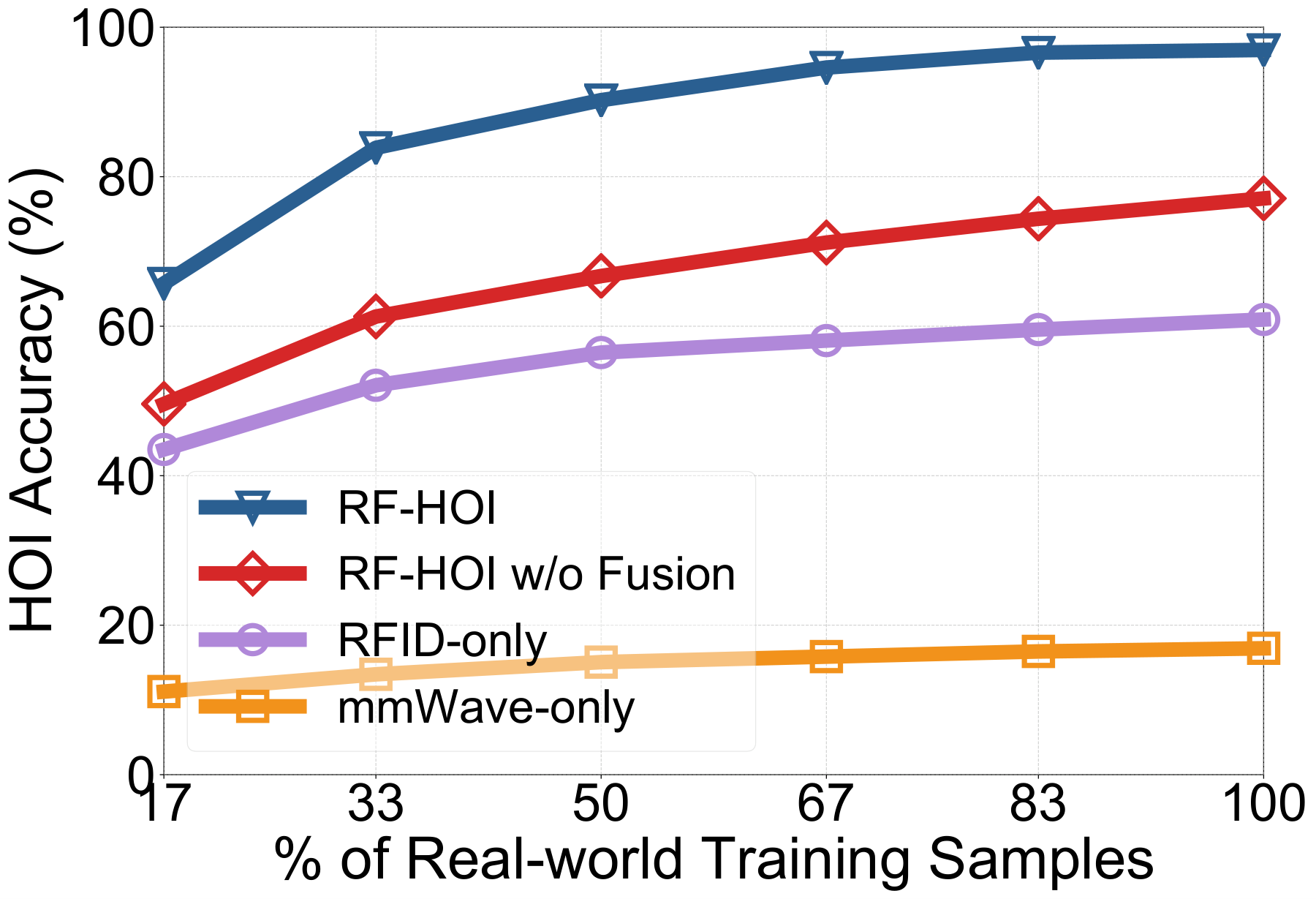
- RF-HOI reaches 96.97% HOI accuracy with full real-world training data, outperforming the no-fusion, RFID-only, and mmWave-only baselines by 19.87%, 36.07%, and 80.06%, respectively.
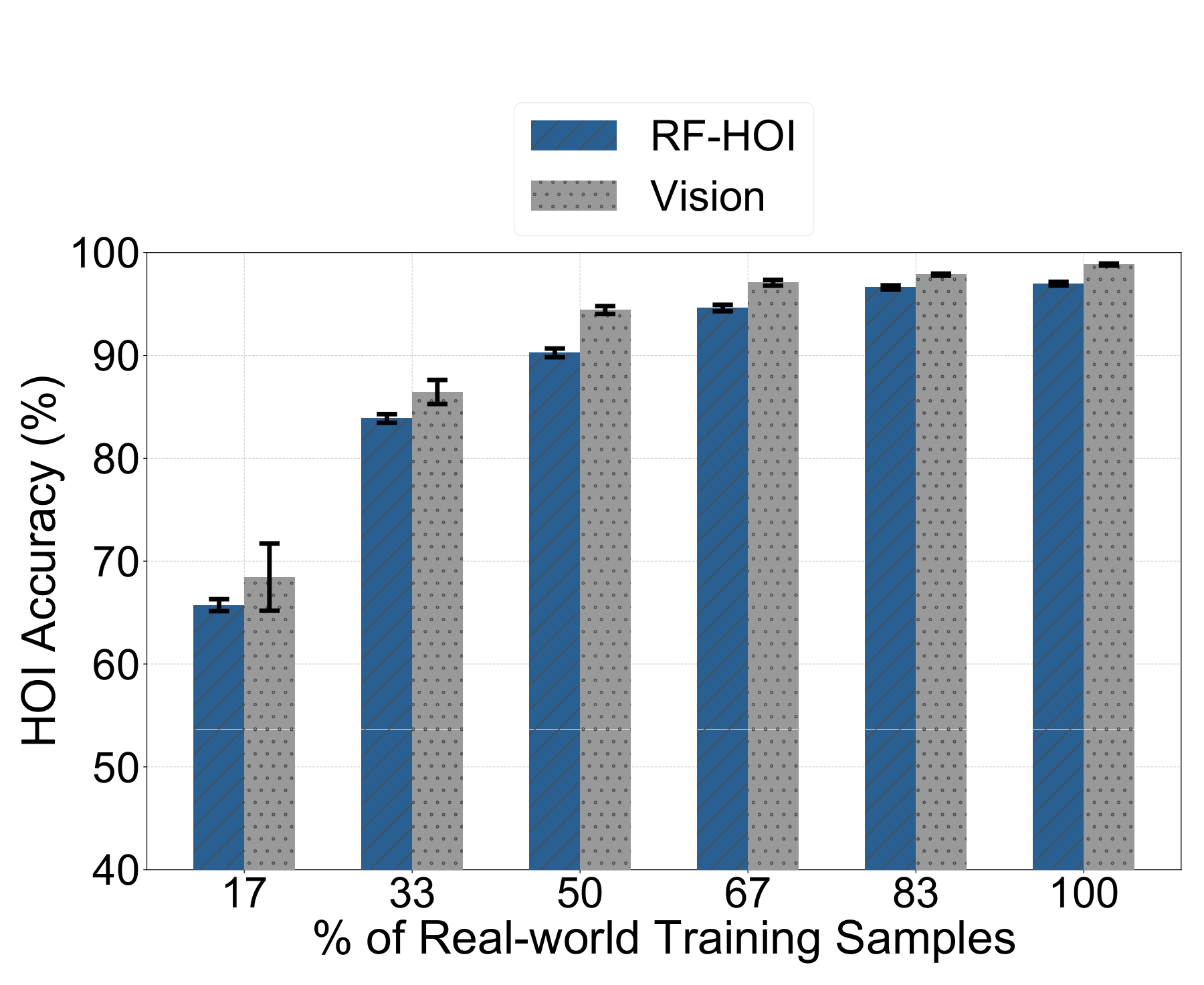
- The average gap to a strong vision (RGB video) baseline is only 2.50%, narrowing to 1.96% with full training data — while avoiding privacy concerns and remaining robust in poor lighting.
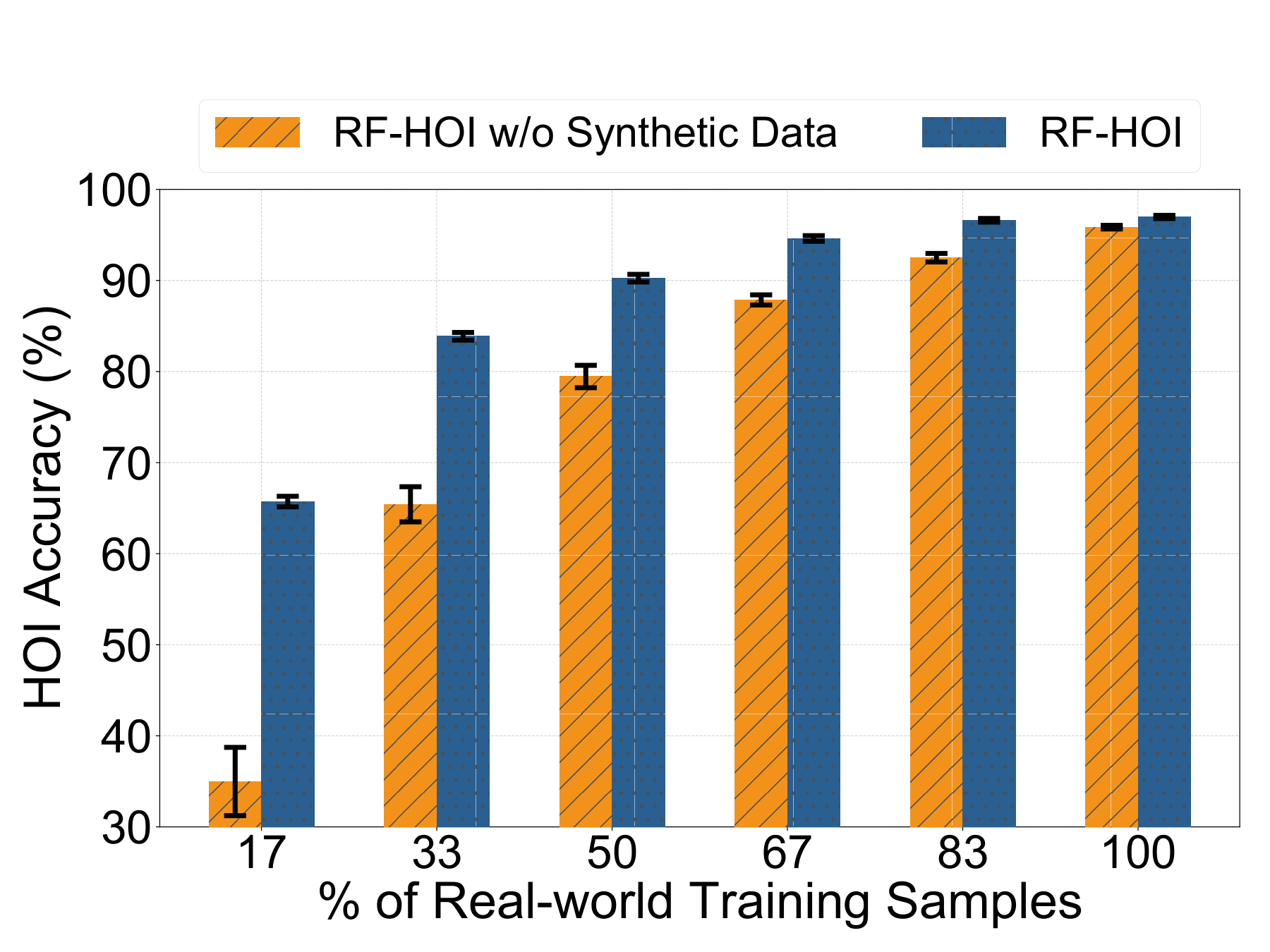
- Pre-training on our synthetic RF data significantly boosts performance when real-world training samples or setups are limited, and RF-HOI maintains over 90% HOI accuracy under people-induced occlusion.
BibTeX
ACM IMWUT:
@article{wang2026rfhoi,
  author    = {Wang, Lihao and Gao, Linlu and Yu, Jiacan and Lin, Yanyu and Yin, Yifan and Wang, Jianxin and Shu, Tianmin and Zhao, Renjie},
  title     = {RF-HOI: Recognize Human-Object Interaction with Radio Frequency Signals},
  journal   = {Proc. ACM Interact. Mob. Wearable Ubiquitous Technol.},
  year      = {2026},
  month     = sep,
  volume    = {10},
  number    = {3},
  articleno = {159},
  numpages  = {36},
  publisher = {Association for Computing Machinery},
  doi       = {10.1145/3831638},
  url       = {https://doi.org/10.1145/3831638}
}
arXiv preprint:
@misc{wang2026rfhoi_arxiv,
  author        = {Wang, Lihao and Gao, Linlu and Yu, Jiacan and Lin, Yanyu and Yin, Yifan and Wang, Jianxin and Shu, Tianmin and Zhao, Renjie},
  title         = {RF-HOI: Recognize Human-Object Interaction with Radio Frequency Signals},
  year          = {2026},
  eprint        = {2608.00289},
  archivePrefix = {arXiv},
  primaryClass  = {cs.AI},
  url           = {https://arxiv.org/abs/2608.00289}
}
Acknowledgements
We thank the anonymous reviewers for their constructive feedback. We also thank Zhehao Zhang and Jienan Chen for their help with data collection.